Hornet & Wasp Pest Control, Manhattan, Williamsburg & Greenpoint, Brooklyn
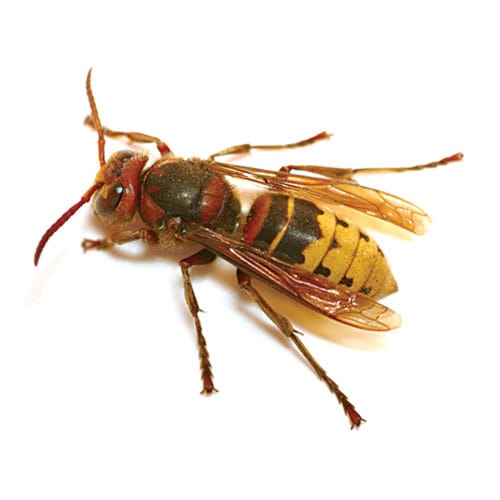
Eagle Pest Control is a team of licensed exterminators providing hornet and wasp pest control for Manhattan and Brooklyn. Our client base includes many residents and businesses in Williamsburg and Greenpoint. Contact us for professional and effective extermination services.
Hornets
Hornets belong to a category of social wasps known for constructing nests from a papery substance made from chewed plant material and wood, typically enveloped in a football-shaped structure.
- Bald-Faced Hornet: This species, also known as the white-faced hornet, is prevalent across North America. Measuring approximately 3 cm (1.2 inches) in length, it’s predominantly black with white markings on its segments and face. Their gray nests are commonly hung from tree branches.
- Yellow Jackets: Yellow jackets, recognized by their extensive yellow markings, build their nests either on or below ground. A single nest can house up to 15,000 individuals. These wasps are often seen near humans, and their stings pose significant risks to individuals allergic to their venom, especially following multiple stings.
- European Hornet: Introduced to the eastern U.S. around 1850, this hornet sports a reddish-brown body with yellow streaks, growing over 2.5 cm (1 inch) long. They build brown nests in hollow trees, rock crevices, or on human-made structures. They feed on insects, their larvae, and ripe fruit.
- Reproductive Behavior: Some hornet species do not produce workers. Instead, the female lays her eggs in the nests of other wasps, where the host species then raise them.
Understanding the habits and habitats of different hornets helps in managing encounters and appreciating their role in the ecosystem while also taking precautions to coexist safely with these insects.
Wasps
Stinging wasps depend on nests for numerous activities, particularly the rearing of their young. The structure of these nests vary significantly:
- Digger Wasps: These wasps create simple, straight burrows in the ground.
- Mud Daubers and Potter Wasps: They build their nests above ground using mud, attaching them to various substrates such as twigs, rocks, or man-made structures. They can range from simple nests with single or few larval cells to more complex ones with multiple cells arranged side by side.
- Vespoid Wasps (Yellow Jackets, Hornets, Paper Wasps): They construct elaborate nests from paper-like material made by mixing chewed wood or bark fibers with their saliva. These nests contain one or more combs, each comprising layers of closely packed larval cells. In some species, these combs are enclosed by an outer cover, creating a protective shell for the colony, commonly known as a “hornet’s nest” that can contain hundreds or thousands of wasps.
Stings
- Stinging Capability: Only female wasps can sting, using their ovipositor to inject venom; males lack this ability. Stinging occurs strictly in defense of themselves or their nests.
- Defensive Behavior: Disturbing nests of certain aggressive species, such as yellow jackets and hornets, can provoke a response from over 100 wasps, each able to deliver multiple stings. Hence, it’s advised to leave such nests undisturbed or have them removed by professionals if they pose a problem.
- Venom Effects: Wasp venom includes substances that cause histamine release, leading to the breakdown of red blood cells. While most people experience only temporary pain and swelling from stings, for roughly 1% of the population with hyperallergic reactions, a sting can be life-threatening.
Understanding the nature and behavior of wasps to cohabit safely with these insects is crucial. Gaining knowledge ensures both human safety and the ecological balance they help maintain.
Hornet and Wasp Pest Control: Know the Difference
Hornets and wasps are frequently confused with bees, but it’s important to distinguish between them as the removal methods differ. Our approach for wasps and hornets involves removal during the evening when all insects are likely within the nest, ensuring complete elimination.
For scheduled service or immediate attention, call 347-853-6721.
Residential and commercial pest control.